9 min read
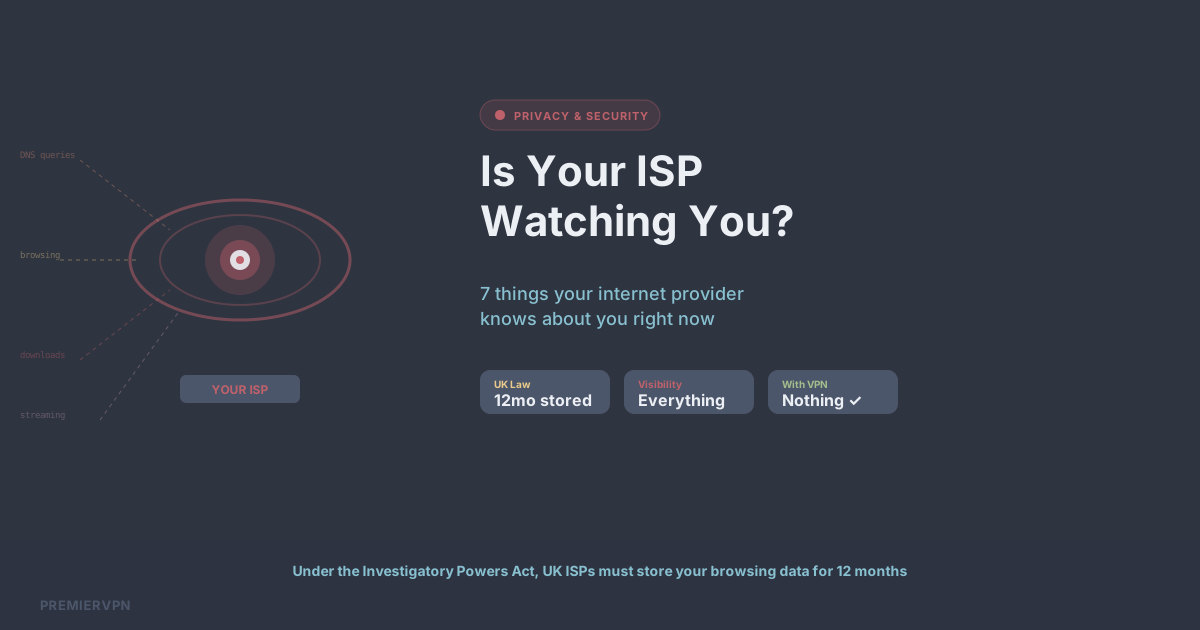
You pay your internet bill every month and probably don't think much about it. But the company delivering your broadband has a remarkably detailed picture of your online life. Here's exactly what your ISP can see — and in many cases, is required by law to store.
1. Every Website You Visit
Even when you use HTTPS (the padlock in your browser), your ISP can see the domain name of every website you visit. They can't see the specific page or what you typed, but they know you visited website.com. Under the UK's Investigatory Powers Act, ISPs are required to store these "Internet Connection Records" for 12 months.
2. Your DNS Queries
Every time you type a website address, your device sends a DNS lookup request — usually to your ISP's DNS server. This gives them a complete log of every domain you've accessed, when you accessed it, and how frequently. This happens even for HTTPS websites.
3. When You're Online
Your ISP knows exactly when you connect to the internet, how long you stay connected, and your usage patterns. They can tell when you wake up, when you go to bed, and whether you're at home or away.
4. Your Streaming Habits
While they can't see the specific film you're watching, your ISP knows you're streaming from Netflix, BBC iPlayer, or YouTube — and can measure exactly how much bandwidth you're using. Some ISPs use this information to throttle streaming services during peak hours.
5. Your Downloads
Torrent traffic has a distinctive pattern that ISPs can easily identify. They know when you're using BitTorrent, and while they can't necessarily see what you're downloading over encrypted connections, they can flag the activity.
6. Your Connected Devices
Your ISP-provided router typically reports back on every device connected to your home network. They know how many phones, laptops, smart TVs, and IoT devices you have — and often the manufacturer and model.
7. Your Location
Your IP address reveals your approximate location. On mobile broadband, your provider has even more precise location data from cell tower triangulation. This data is routinely stored and can be requested by law enforcement.
How to Take Back Your Privacy
A VPN encrypts all traffic between your device and the VPN server. Your ISP can see that you're connected to a VPN, but nothing else — no websites, no DNS queries, no streaming activity, no download patterns. All they see is encrypted data flowing to a single IP address.
With PremierVPN, your DNS queries are handled by our private DNS servers, not your ISP's. Your traffic is encrypted with military-grade WireGuard encryption. And because we're a zero-log provider, there's no record of your browsing activity on our end either.